


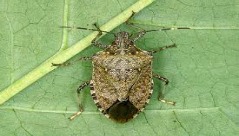
September 1 marks the beginning of Australia’s risk season for the Brown Marmorated Stink Bug (BMSB) – a highly invasive pest which has the potential to devastate crops and damage goods, and is known for being able to establish quickly in new environments. The Department of Agriculture, Fisheries and Forestry (DAFF) has released its seasonal measures for the 2025-26 season, with importers urged to ensure they’re well informed and prepared to avoid costly delays, re-export, or non-compliance penalties.
Season Commencement
The season runs from 1 September 2025 through to 30 April 2026 (inclusive), with treatment measures required for certain high-risk goods shipped on board (date on Bill of Lading) from target risk countries during this period.
Target risk countries
While there are no new additions to the list of target risk countries, it’s important to familiarise yourself with the countries which require mandatory treatment.
| Albania | Andorra | Armenia | Austria | Azerbaijan | |||
| Canada | Croatia | Czechia | France | Georgia | |||
| Italy | Kazakhstan | Kosovo | Liechtenstein | Luxembourg | |||
| Poland | Portugal | Spain | Romania | Russia | |||
| Bosnia and Herzegovina | Türkiye | Ukraine | Uzbekistan | United States of America | |||
| Switzerland | Greece | Moldova | Slovakia | Republic of North Macedonia | |||
| Netherlands | Slovenia | Bulgaria | Hungary | ||||
| Belgium | Germany | Montenegro | Serbia | ||||
| Emerging risk countries for the – BMSB risk season and may be selected for a random onshore inspection | |||||||
| United Kingdom | China | Japan* | Republic of Korea* | ||||
*Japan and Republic of Korea have been added to this list for the upcoming 25-26 Season
Target high risk goods arriving as airfreight from United States of America and China will be subject to random inspections.
Target high risk goods
Goods that fall within the following tariff classifications have been categorized as target high risk goods and will require mandatory treatment for BMSB risk.
| 44 – Wood and articles of wood; wood charcoal | 45 – Cork and articles of cork | 57 – Carpets and other textile floor coverings |
| 68 – Articles of stone, plaster, cement, asbestos, mica or similar materials | 69 – Ceramic products | 70 – Glass and glassware |
| 72 – Iron and steel | 73 – Articles of iron or steel | 74 – Copper and articles thereof |
| 75 – Nickel and articles thereof | 76 – Aluminium and articles thereof | 78 – Lead and articles thereof |
| 79 – Zinc and articles thereof | 80 – Tin and articles thereof | 81 – Other base metals; cermets; articles thereof |
| 82 – Tools, implements, cutlery, spoons and forks, of base metal; parts thereof of base metal | 83 – Miscellaneous articles of base metals | 84 – Nuclear reactors, boilers, machinery and mechanical appliances; parts thereof |
| 85 – Electrical machinery and equipment and parts thereof; | 86 – Railway or tramway locomotives, rolling-stock and parts thereof | 87 – Vehicles other than railway or tramway rolling-stock, and parts and accessories thereof |
| 88 – Aircraft, spacecraft, and parts thereof | 89 – Ships, boats and floating structures |
Target Risk Goods
Goods that fall within the following tariff classifications have been categorised as target risk goods and are only subject to increased onshore intervention through random inspection. Mandatory treatment is not required.
| 27 – Mineral fuels, mineral oils and products of their distillation | 28 – Inorganic chemicals; organic or inorganic compounds of precious metals, of rare-earth metals | 29 – Organic chemicals |
| 38 – Miscellaneous chemical products | 39 – Plastics and articles thereof | 40 – Rubber and articles thereof |
| 48 – Paper and paperboard; articles of paper pulp, of paper or of paperboard | 49 – Printed books, newspapers, pictures and other products of the printing industry | 56 – Wadding, felt and nonwovens; special yarns; twine, cordage, ropes and cables and articles thereof |
For all other goods that are not categorised as target high risk and target risk goods, BMSB seasonal measures do not apply. However, it’s important to note that if they are part of a container or consignment that contains target high risk or target risk goods, they will be subject to the measures.
Treatment of target high risk goods
Containerised cargo (FCL, FCX)
Containerised cargo arriving in sealed six hard sided containers with target high risk goods can be treated offshore, or onshore. The department recommends offshore treatment for containers subject to BMSB measures to aide in faster border clearances upon arrival.
Less than Container Load (LCL)
During the BMSB risk season, less than Container Load (LCL) consignments and Freight of All Kinds (FAK) containers with target high risk goods will require treatment. Unpacking or removal of goods will not be permitted before treatment.
Break bulk consignments (including flat rack and open top containers)
Mandatory offshore treatment of target high risk goods shipped as break bulk cargo, including goods shipped in open top containers or on flat rack containers, will be required. Untreated break bulk will be denied discharge and be directed for export on arrival.
Shipper Owned Containers (SOCs) and FCL containers that have been modified, such as those used to house in-built power generators, filtration plants, portable accommodation etc. are no longer sealed six hard sided containers and are considered break bulk cargo.
Treatment Types
- Heat Treatment – 56°C or higher at the coldest surface of the goods, for a minimum of 30 minutes
- Methyl Bromide – Unavailable in European countries
- Sulfuryl Fluoride
- Ethyl Formate – For a formulation of 16.7% Ethyl Formate with 83.3% carbon dioxide
Packing Guidelines
Packing cargo correctly for fumigation under the Brown Marmorated Stink Bug (BMSB) seasonal measures is essential to ensure effective treatment and compliance with Australian biosecurity requirements. Improper packing can lead to ineffective fumigation, delays, or even rejection of the shipment.
- Ensure sufficient spacing within the container.
Do not overpack your goods. Proper air circulation is essential for effective fumigation. - If shrink wrap is used, it must be slashed or adequately opened to allow the fumigant to penetrate all areas of the cargo.
New measures introduced for 2025-2026 season
- New Emerging Risk Countries
The Republic of Korea and Japan have been added to the emerging risk list. Goods from these locations are now subject to random onshore inspection, although mandatory treatment is not required. - Airfreight Inspections Introduced
For the first time, target high‑risk goods arriving by air from the USA and China will be subject to random inspection, though no treatment is required. - Ethyl Formate Added as a Treatment Option
A new offshore treatment method using Ethyl Formate (often with CO₂) is now approved for fumigation. This is currently offshore only; onshore approval is still under review. - New Application Process for In‑Transit & Rolled Cargo
A revamped process is in place for consignments that are in‑transit or have been rolled (rescheduled), under updated policy guidelines.
At EES, we know that effective organisation is the key to navigating the BMSB season. Importers who act early by securing approved treatment providers, maintaining accurate documentation, and stay up to date with the latest DAFF requirements should expect to move their cargo with minimal disruption.
Having the right information from the outset can be the difference between smooth customs clearance and costly delays. When it comes to managing this seasonal biosecurity risk, proactive preparation remains your most effective tool.
If you have any questions, please contact our team on (08) 9414 7711 or email our Customs Broker at broker2@eescair.com
References
- Seasonal measures for Brown marmorated stink bug (BMSB) – DAFF
- Pre-border Biosecurity Treatment Providers – DAFF


